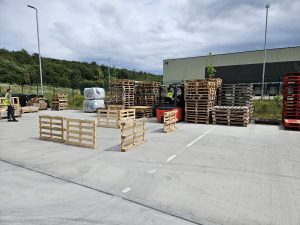
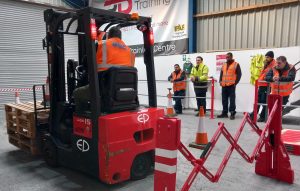
In the vast world of forklift operations, the contexts in which these powerful machines are utilised can differ greatly. From the tightly-packed aisles of warehouses to the unpredictable terrains of construction sites, each environment presents its own set of unique challenges. As a nationwide forklift training company in the UK, we’ve observed the key distinctions between forklift usage in warehousing as opposed to construction. In this blog, we’ll delve into these challenges and why specialised training for each setting is crucial.
1. Space Constraints
Warehousing: Forklifts used in warehouses often manoeuvre in tight spaces. The rows between storage racks are narrow, requiring precise control to prevent damage to goods or infrastructure. Efficient space utilisation is a must, and there’s little room for error.
Construction: While construction sites can sometimes offer more space, they come with their own set of constraints. Equipment, materials, and ongoing work might necessitate intricate navigation routes, and operators might have to work in confined spaces.
2. Surface Conditions
Warehousing: Warehouses typically have flat, even floors. This means that while the surface is predictable, any spills or debris can pose significant hazards, especially when carrying heavy loads.
Construction: Construction sites are notorious for their uneven and frequently changing terrains. Mud, gravel, and incomplete surfaces can challenge even the most experienced forklift operator.
3. Load Variability
Warehousing: In a warehouse, loads are usually standardised – think pallets of boxed goods or uniform crates. The challenge often lies in stacking and retrieving these from significant heights.
Construction: Construction sites present a varied array of materials, from bricks and cement to large beams and machinery parts. This demands versatility from the operator in terms of understanding load limits, centre of gravity, and securing the materials.
4. Interactions with Other Workers
Warehousing: Warehouses are bustling environments with pickers, packers, and other machinery. A forklift operator must be acutely aware of their surroundings at all times to ensure the safety of their colleagues.
Construction: Similar to warehousing, construction sites are full of activity. However, the activities are even more varied – from masons laying bricks to electricians working on installations. Coordination and communication become paramount.
5. Weather Conditions
Warehousing: Most warehouse operations are indoor, sheltering operators from the unpredictability of the British weather.
Construction: Operating a forklift outdoors means facing the UK’s varied weather conditions head-on. Rain can make surfaces slippery, wind can affect load stability, and fog can decrease visibility.
6. Regulatory and Safety Protocols
Warehousing: Warehouses typically have set protocols in place, often centred around inventory management and safety. These procedures help streamline operations and keep workers safe.
Construction: Every construction site is unique, and so are its safety protocols. Forklift operators must be adaptable, learning and adhering to site-specific guidelines.
Conclusion
Both warehousing and construction environments demand a keen sense of awareness, precision, and adaptability from forklift operators. While some skills and principles are transferable, the unique challenges presented by each environment underscore the need for specialised training. Whether you’re in warehousing or construction, our nationwide forklift training ensures that operators are well-equipped to handle their tasks with confidence and competence.
At the heart of it all is a commitment to safety, efficiency, and excellence. It’s not just about operating the machine; it’s about understanding the environment and making informed decisions every step of the way. If you’re looking to enhance your forklift skills or those of your team, reach out to us today on 01344 830015 or email us at enquiries@pd-training.co.uk.